

Article
10 Dead by Daylight Survivor Perk Builds That Are Actually Useful in 2026
10 useful Dead by Daylight Survivor perk builds for 2026, including solo queue, looping, gens, healing, stealth, endgame, and beginner builds.
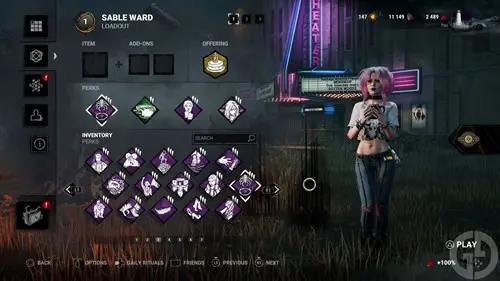
There are enough Survivor perks in Dead by Daylight that making a build can honestly be more overwhelming than helpful. You can throw four individually strong perks together and still end up with a build that doesn't really have a purpose.
These 10 Survivor builds are built around an actual job. Some are general-purpose, while others are made specifically for solo queue, looping, generators, healing, flashlight saves, stealth, or surviving the endgame.
In This Guide
- Best All-Around Survivor Build
- Best Solo Queue Build
- Best Chase & Looping Build
- Anti-Tunnel Build
- Generator Build
- Healing & Team Support Build
- Flashlight Save Build
- Stealth & Escape Build
- Endgame Build
- Beginner-Friendly Build
Build #1: Best All-Around Survivor Build
Lithe • Windows of Opportunity • Déjà Vu • Decisive Strike
BEST FOR: General matches, solo queue or SWF
PLAYSTYLE: Balanced
If you don't want to specialize too heavily in one thing, start here. This build gives you something useful during almost every part of a normal match.
Windows of Opportunity gives you information during chases, while Lithe gives you a reliable way to create distance after a fast vault. Together, they're especially useful if you're still learning which loops connect and where your next escape route should be.
Déjà Vu gives the build an objective perk so you aren't wandering around looking for generators, and Decisive Strike gives you some protection if the Killer decides you're going straight back on the hook.
Why it works:
Information, an Exhaustion perk, objective help, and anti-tunnel protection without forcing you into one specific role.
Build #2: Best Solo Queue Build
Kindred • Sprint Burst • Déjà Vu • We'll Make It
BEST FOR: Playing without friends
PLAYSTYLE: Information / Objectives / Support
Solo queue's biggest problem isn't necessarily bad teammates. It's that nobody knows what anybody else is doing.
Kindred helps fix that around hooks, giving everyone more information about what's happening and making it much easier to know whether you should go for the save or stay on your generator.
Déjà Vu keeps you moving between useful generators, We'll Make It turns a successful rescue into a fast heal, and Sprint Burst gives you an escape option without requiring a specific window or pallet first.
It's the build I'd use if I wanted one setup specifically for queuing alone.
Build #3: Best Chase & Looping Build
Lithe • Windows of Opportunity • Finesse • Resilience
BEST FOR: Players who want the Killer chasing them
PLAYSTYLE: Chase / Looping
This build is about getting as much value as possible out of windows, pallets, vaults, and strong tiles.
Windows of Opportunity is the backbone of the setup. Knowing what resources are still available makes it much easier to connect one loop to another instead of running into a dead zone.
Lithe rewards a successful fast vault with distance, while Finesse makes windows even more useful when its effect is available. Resilience also becomes useful while injured, which is when you're likely spending plenty of time in chase anyway.
It's also a good build for actually learning maps. Eventually you may stop needing Windows as much because you'll start recognizing where your next tile should be.
Build #4: Anti-Tunnel Build
Decisive Strike • Off the Record • Babysitter • Dead Hard
BEST FOR: Surviving after being unhooked
PLAYSTYLE: Endurance
Sometimes the Killer has decided that your next objective is apparently just surviving the next 45 seconds.
This build is for those matches.
Off the Record and Decisive Strike make immediately going after you less convenient for the Killer. Babysitter can help the Survivor leaving the hook get away more safely, while Dead Hard gives you another tool when you're already injured and need to stretch a chase.
Use it when:
Your matches keep turning into repeated hook trades and immediate chases off the hook.
Build #5: Generator Build
Hyperfocus • Stake Out • Déjà Vu • Built to Last
BEST FOR: Generator-focused players
PLAYSTYLE: Objective
If your favorite sound in Dead by Daylight is a generator popping while somebody else is being chased across the map, this is your section.
Hyperfocus and Stake Out form the skill-check side of the build, while Déjà Vu tells you which generators are especially useful to pressure.
Built to Last makes a good toolbox go much further, letting the build lean even harder into objective pressure.
The important part is not becoming so obsessed with generator efficiency that you ignore everything else. If everybody is dead on second stage, an extra few seconds of repair speed won't save the match.
Build #6: Healing & Team Support Build
We'll Make It • Empathy • Reassurance • Aftercare
BEST FOR: Keeping the team alive
PLAYSTYLE: Support / Information
This is for the player who somehow ends every match with half the team's altruism points.
We'll Make It makes post-hook healing much more efficient, while Empathy helps you find injured teammates when they actually need you.
Aftercare rewards those interactions with useful information afterward, and Reassurance can buy time when the Killer is making a hook rescue difficult and forcing the team into a bad trade.
The goal:
Support the team without spending the entire match running behind everyone looking for someone to heal.
Build #7: Flashlight Save Build
Background Player • Champion of Light • Bond • Flashbang
BEST FOR: Saves and aggressive team play
PLAYSTYLE: Flashlight / Rescue
If you're the person lurking behind a rock every time somebody gets downed, at least commit to the playstyle.
Bond helps you keep track of nearby Survivors and makes it easier to anticipate where a chase or pickup is going to happen.
Background Player is designed around rapidly getting into position for a save, while Champion of Light complements flashlight-oriented gameplay. Flashbang gives you another possible save option when a flashlight isn't available.
One warning:
Don't spend the entire match following the Killer around hoping for one heroic save. Generators are still an objective.
Build #8: Stealth & Escape Build
Iron Will • Lucky Break • Quick & Quiet • Lightweight
BEST FOR: Losing the Killer
PLAYSTYLE: Stealth
This isn't a hide-in-a-locker-for-three-minutes build. It's a break-chase-and-disappear build.
Quick & Quiet lets you make certain rushed actions without the usual loud-noise notification, while Lucky Break can make following you after an injury more difficult.
Iron Will reduces another source of information the Killer can use while you're injured, and Lightweight makes your scratch marks less dependable.
The goal is to create uncertainty. Break line of sight, change direction, and make the Killer guess incorrectly about where you went.
Build #9: Endgame Build
Adrenaline • Hope • Wake Up! • No One Left Behind
BEST FOR: Exit-gate chaos
PLAYSTYLE: Endgame / Escape
For most of the match, you're basically playing with fewer perks. Then the last generator finishes.
That's the entire point.
Adrenaline and Hope reward you for actually reaching the endgame, while Wake Up! helps with the exit-gate portion of the match and No One Left Behind becomes useful when the team is trying to get everybody out.
It's not the most consistent setup because several perks provide little or no value until the endgame actually arrives. But when everything activates during a messy finish, it's extremely satisfying.
Build #10: Beginner-Friendly Survivor Build
Windows of Opportunity • Lithe • Déjà Vu • Kindred
BEST FOR: Learning Dead by Daylight
PLAYSTYLE: Information / Balanced
For a newer player, information is often more useful than trying to copy a complicated meta build.
Windows of Opportunity teaches you where pallets and windows are. Déjà Vu helps you understand generator placement. Kindred gives you information during one of the most important parts of every match, and Lithe gives you a straightforward Exhaustion perk to use during chase.
More importantly, these perks help you learn things that still matter when you eventually stop using them.
Which Survivor Build Should You Use?
If you don't know where to start, use the All-Around Build . If you mostly play alone, try the Solo Queue Build . If the chase is your favorite part of Dead by Daylight, go straight to the Chase & Looping Build .
But don't treat perk builds like strict rules. Swap things around.
If you love Windows of Opportunity but hate Lithe, use another Exhaustion perk. If you're constantly getting value from a perk that isn't considered "meta," there's no reason to remove it just because somebody put it lower on a tier list.
Quick Picks
Best Overall: Lithe • Windows • Déjà Vu • Decisive Strike
Best Solo Queue: Kindred • Sprint Burst • Déjà Vu • We'll Make It
Best for Chase: Lithe • Windows • Finesse • Resilience
Best for Gens: Hyperfocus • Stake Out • Déjà Vu • Built to Last
Best for Beginners: Windows • Lithe • Déjà Vu • Kindred
Dead by Daylight's perk pool is enormous now, which is exactly why I prefer builds with a clear purpose. Think about what you actually want to accomplish in the match first, then choose perks that help you do it.
And if you're tired of running the same four perks every game, that's probably a pretty good reason to try one of these builds on the list.
Dead by Daylight perks are regularly changed and rebalanced. These builds are intended for 2026 gameplay and may need adjustments after future patches.